
- Jio Platforms IPO has attracted over $20 billion in anchor investor interest, showing strong confidence from global and domestic investors.
- The IPO aims to raise around ₹30,000–₹30,200 crore and may become India’s biggest public offering.
- The company is issuing new shares, and the funds are expected to support business growth and repay telecom debt.
- Jio Platforms operates in telecom, broadband, digital apps, and related services, with a large user base and major global investors.
- Despite strong demand, investors should consider competition, regulations, high valuation, and long-term business performance before investing.
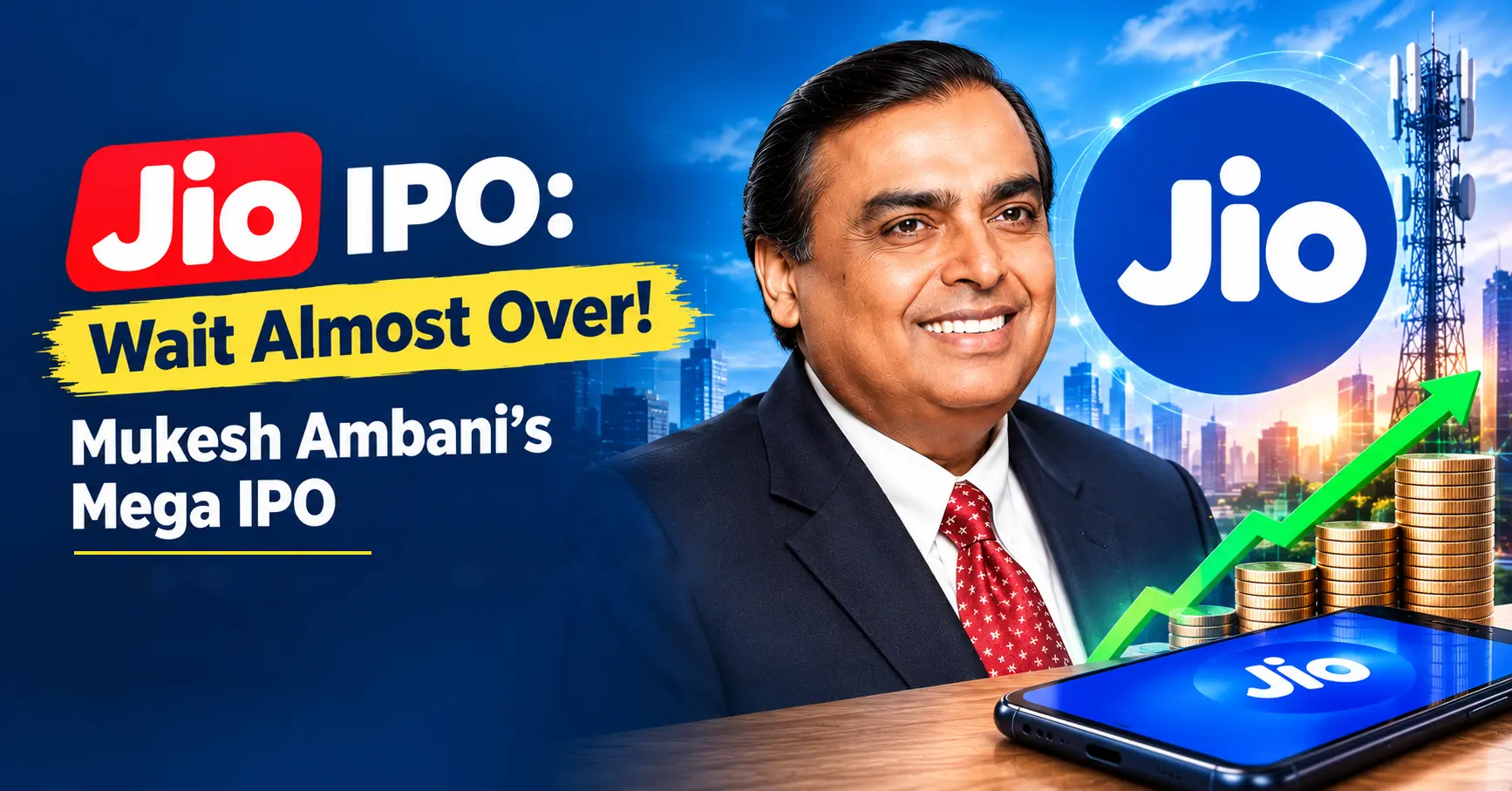
Jio Platforms IPO is shaping up as India’s biggest public offering yet, with the anchor book already drawing over $20 billion in interest from global and domestic investors. This strong demand, even at a revised valuation of around ₹10.3 lakh crore, signals solid confidence in the company’s digital and telecom business ahead of the expected public subscription next week.
A young managing director flies across Hong Kong, London, and New York, meeting fund managers who manage billions. He talks about data, 5G, apps, and the future of connectivity in India.
The response is not polite interest. It is a flood of bids. That young leader is Akash Ambani, and the company is Jio Platforms. What started as a telecom disruptor has grown into a digital powerhouse, and now the market is lining up for a piece of it through the Jio Platforms IPO.
This is more than another listing. It is the moment when one of India’s most closely watched private companies steps into the public markets. For beginners, an IPO simply means a company sells shares to the public for the first time so it can raise money and let ordinary investors own a part of the business. In this case, the excitement is real because the numbers are huge and the brand is familiar to almost every Indian.
Why the Anchor Book Matters So Much
Before the public offer opens, companies first offer a portion of shares to large institutional investors. These are called anchor investors. Their early commitment gives confidence to retail investors and helps set the tone for the entire issue. In the case of the Jio Platforms IPO, reports say the anchor book has already attracted bids worth more than $20 billion.
Big names such as Fidelity, Allianz, and Capital Group have shown interest, along with other international and Indian institutions. The final list of anchors is expected in the coming days. This level of demand is unusual and shows that sophisticated investors see long-term value in Jio Platforms even after the company lowered its valuation target from earlier peak expectations of around $170 billion.
Key Jio Platforms IPO Details at a Glance
Here is a simple table with the main tentative details based on the latest reports:
|
Parameter |
Details |
|
Issue Type |
Fresh issue only (no Offer for Sale) |
|
Shares on Offer |
Up to 27 crore equity shares |
|
Expected Issue Size |
Around ₹30,000 – ₹30,200 crore |
|
Valuation Target |
Up to ₹10.3 lakh crore (~$108 billion) |
|
Listing Exchanges |
BSE and NSE |
Jio Platforms Financial Performance: Steady Growth and Strong Margins
One of the biggest reasons investors are excited about the Jio Platforms IPO is the company’s solid financial track record. Over the last three years, revenue, profits, and cash generation have all moved in the right direction while debt has come down.
For detailed Jio financials, read our Jio IPO blog, in which we have covered its financials in detail.
The Story Behind the Numbers
Jio Platforms is the digital and telecom arm of Reliance Industries. It runs mobile services, broadband, digital apps, and related businesses. Over the years, it has built a massive user base and attracted big global investors such as Meta and Google, who still hold significant stakes.
Importantly, none of the existing investors are selling shares in this IPO. The entire issue is a fresh issue, meaning all the money raised will go into the company. Most of the proceeds are expected to be used to repay debt of the telecom subsidiary.
Earlier talk had placed the valuation much higher. Market conditions and careful pricing have brought the target down to a more realistic ₹10.3 lakh crore. Many see this as a positive step because it leaves room for listing gains and long-term upside.
The grey market premium, or GMP, has been hovering around ₹200–₹220 in recent days, suggesting the market expects a healthy premium on listing day. Remember, GMP is unofficial and can change quickly.
What Makes This Jio Platforms IPO Different
First, the size. If it raises around ₹30,000 crore, it will overtake previous records and become India’s largest IPO. Second, the pure primary nature of the issue means the company itself benefits from the capital.
Third, the strong pre-IPO interest from global funds reduces the risk of weak subscription. Fourth, there is a reservation expected for eligible Reliance Industries shareholders, which creates an additional pool of buyers.
For a beginner, the process is straightforward. Once the issue opens, you apply through your demat account via ASBA or UPI. You choose the number of lots you want. Allotment is usually done on a proportionate basis if demand is high. Shares get credited to your demat account a day or two before listing.
Risks and Realistic Expectations
No IPO is risk-free. Telecom is a capital-intensive business. Competition remains strong. Regulatory changes can affect profits. The valuation, while more reasonable than earlier whispers, is still high by traditional measures.
Grey market premiums often fade once the actual demand and final price become clear. Long-term investors should look at the company’s ability to grow digital revenue, improve margins, and reduce debt rather than just the listing-day pop.
The presence of marquee global investors as anchors is a strong signal, but it does not guarantee future performance. Always read the risk factors section of the prospectus carefully.
How the Roadshow Built Momentum
Akash Ambani has led the investor meetings. Reports say questions focused on valuation, monetisation of digital services, and future growth plans, including 5G densification and new technology partnerships. The fact that interest stayed high even after the valuation was revised shows that many large funds believe in the underlying business.
Conclusion
The company is expected to file the Red Herring Prospectus soon. Once that is done, the final price band, exact dates, and lot size will be confirmed. Anchor investors will bid a day or two before the public issue opens. Public subscription is likely to run for three days. Allotment and refunds follow quickly, and listing is targeted before the end of October 2026.
For retail investors, the key is to stay informed through official channels rather than relying only on social media or grey market chatter. Decide your investment amount based on your risk appetite and overall portfolio, not on FOMO.
The Jio Platforms IPO has already created a rare level of buzz. The $20 billion anchor interest is a powerful vote of confidence. Whether you apply or simply watch from the sidelines, this listing will be one of the most important events in the Indian equity market this year. It will also give public investors a direct way to participate in one of India’s largest digital platforms.
(Sources:- 5paisa, Unlistedzone, Angelone , Moneycontrol, Bajajbroking )
Frequently Asked Questions
This is lower than earlier peak estimates of $170 billion, making the pricing more attractive for new investors while still ranking as India’s largest IPO by size. Final numbers will appear in the Red Herring Prospectus.
GMP is an unofficial indicator and can rise or fall sharply based on final pricing, overall market mood, and actual subscription numbers. It should never be the sole basis for an investment decision.
The high institutional interest and pure fresh-issue structure are positives. However, beginners should understand that telecom and digital businesses face competition, regulatory risks, and high capital needs. Invest only an amount you can afford to hold for the medium to long term, and always read the prospectus before applying.
.webp)
Any question or suggestion
Post your Thoughts
Your email address will not be published. Required fields are marked *